 Seoul City Guide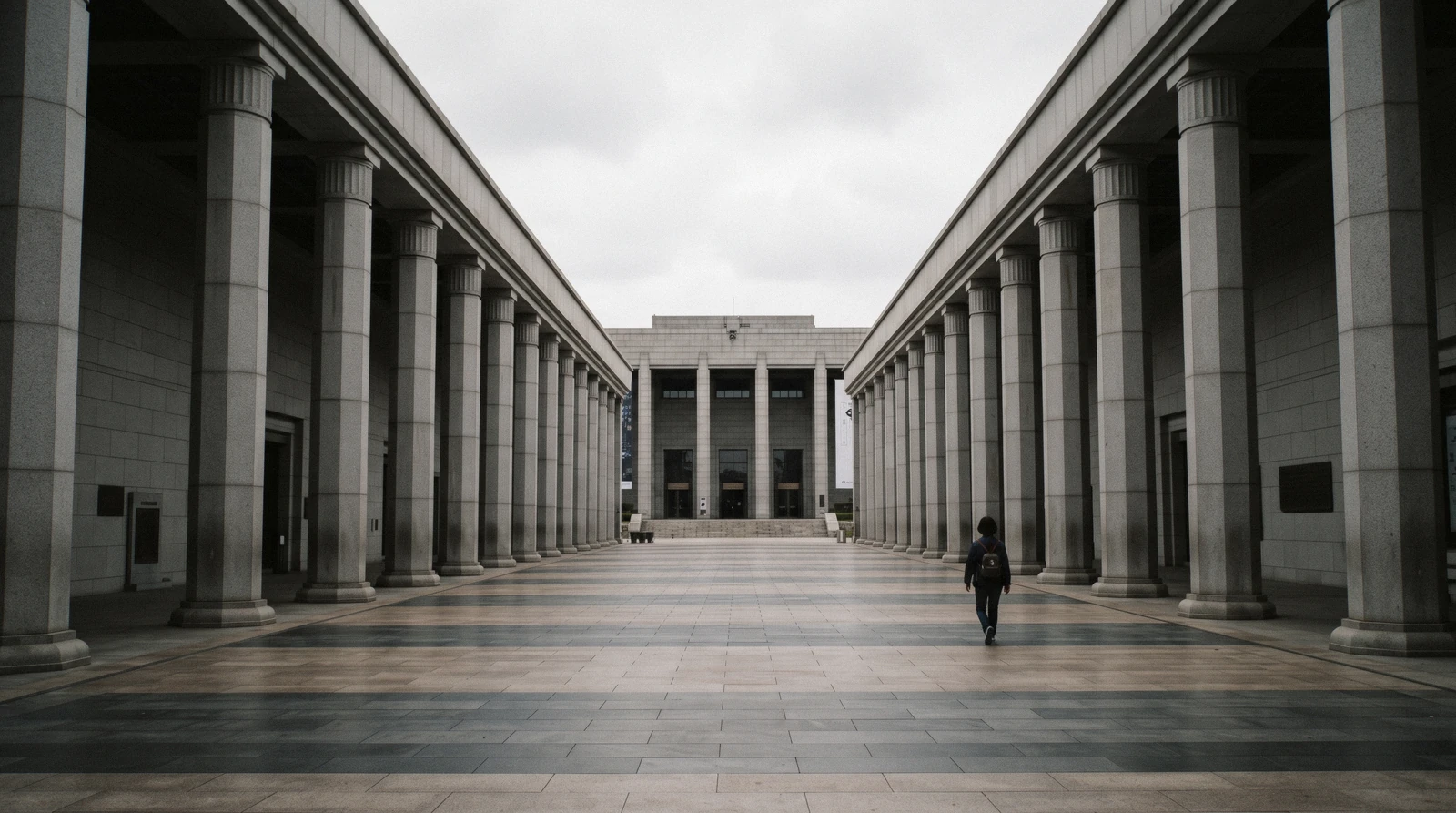
The War Memorial of Korea: Free, and the Best Explanation of the DMZ
The War Memorial of Korea in Yongsan is free, enormous, and the single clearest account in English of why the peninsula is divided — which makes it the right thing to do before a border tour rather than after one. This page carries the hours, the Monday closure and how to walk it in two hours, checked in Q3 2026. The rest of the city is on the Seoul city guide homepage.
Quick answer Free, two hours, and it makes the border make sense
The War Memorial of Korea covers Korean military history from antiquity to the present, but the reason to go is the Korean War: three floors that take the events of 1950 to 1953 in order, with maps, film, weapons and personal objects, all labelled in English. It is free, it opens 09:30 to 18:00, and it closes on Mondays. Outside, a park of aircraft, tanks and a destroyer's superstructure is open to walk through.
Key takeaways
- Do this before a DMZ tour, not after. The border makes very little sense without the three years that produced it.
- Two hours is enough for the war halls; the memorial corridors and the outdoor park add another half hour.
- Closed Mondays — the National Museum of Korea fifteen minutes away is the Monday substitute, and also free.
Key facts
Opening hours
| Tuesday to Sunday | 09:30–18:00 |
|---|
Closed Mondays. If the Monday is a public holiday, the following working day is taken instead.
Admission
- Adult
- Free
- Reduced
- Free
- Free
- All permanent halls and the outdoor equipment park
Planning it
- Time needed
- Two hours inside; add thirty minutes for the outdoor aircraft and armour
- Address
- 29 Itaewon-ro, Yongsan-gu, Seoul — Samgakji (Lines 4 and 6), Exit 12
What Is Inside
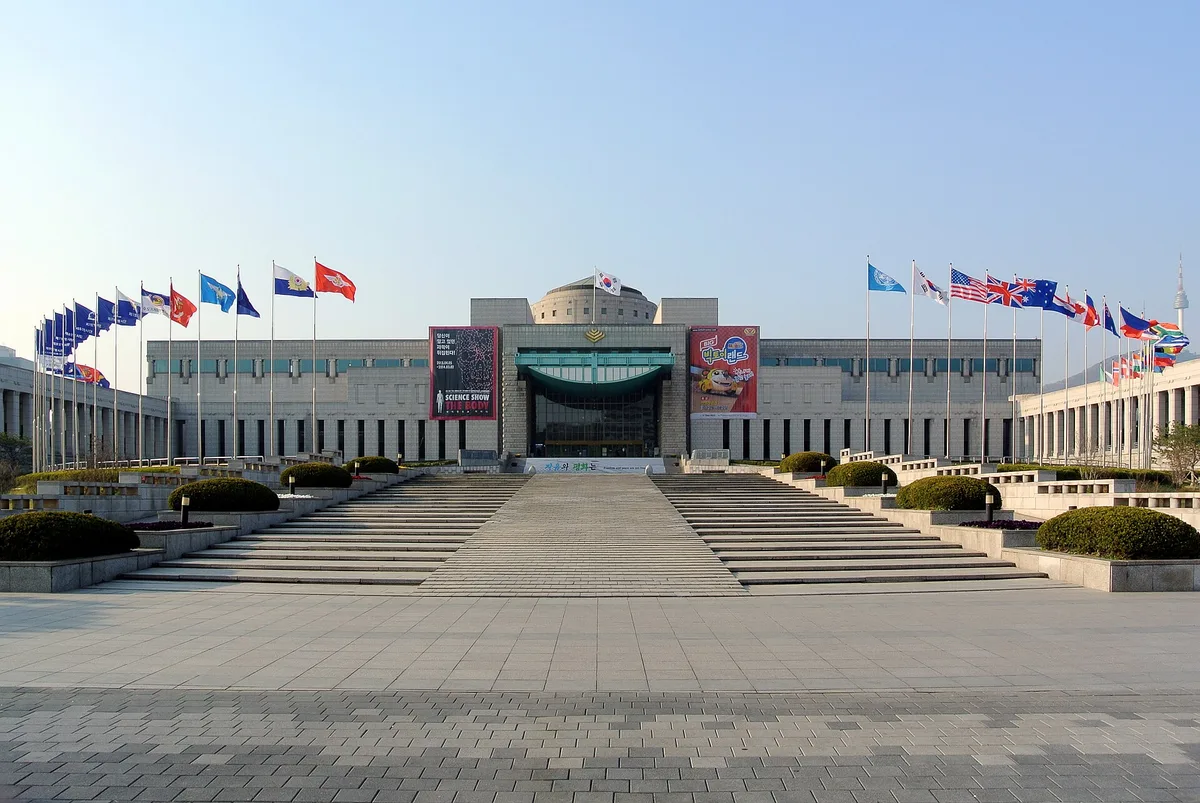
The building is deliberately monumental — a vast colonnaded forecourt, a memorial hall of names, and galleries arranged around a central atrium — and it stands on the site of the former army headquarters in Yongsan.
The permanent exhibition runs chronologically. The early halls cover pre-modern warfare on the peninsula, which most visitors move through quickly. The Korean War rooms are the substance: the invasion of June 1950, the retreat to the Pusan perimeter, the Incheon landing, the Chinese intervention, the stalemate and the armistice of 1953, told with maps that make the movements legible, contemporary film, and the equipment of both sides.
After that come halls on the Republic of Korea's later deployments — Vietnam, peacekeeping missions — and a hall on the armed forces today.
The memorial corridors around the forecourt carry the names of the dead, including those of the twenty-one countries that fought under the United Nations command. Visitors from those countries frequently find their national contingent listed, and it is worth the five minutes.
Why It Belongs Before the DMZ
A DMZ tour is a strange experience without context: you stand at an observation post looking at hills, walk down a tunnel dug by one army towards the other, and hear a great deal of detail about incidents that presuppose knowledge of a war most visitors have only heard of.
Two hours here supplies that. The sequence of 1950 to 1953 — how close the South came to losing in the first summer, how far north the front went afterwards, and why the line ended up roughly where it started — is what makes the border legible.
It also supplies the emotional context that a tour bus does not. The names in the corridors, the Brothers statue at the entrance and the halls of personal effects do more work than any commentary at the border itself.
The practical version of this advice: put the memorial on the day before the tour, and remember that both the memorial and the DMZ require some planning — the border cannot be visited independently.
Practical Detail
Samgakji station on Lines 4 and 6, Exit 12, is beside the site. It is fifteen minutes from the National Museum of Korea and ten from Itaewon, which makes a Yongsan day straightforward — though the memorial and Leeum both close on Mondays and the national museum does not.
Everything is labelled in English, and audio guides and free guided tours are available; times are posted at the information desk.
The outdoor park is the part children remember: rows of aircraft including a B-52, tanks, artillery and the superstructure of a destroyer, all walkable and several enterable. It is open in all weather and costs nothing.
Allow two hours inside as a minimum. The building is large enough that a rushed visit produces nothing but tired legs, and the Korean War halls alone deserve most of that time.
What It Costs
Entry is free, including the outdoor equipment park. Access from warmemo.or.kr, partner prices from GetYourGuide, checked in Q3 2026.
| Option | Price | What it gets you | Notes | Book |
|---|---|---|---|---|
| Permanent halls and the outdoor park | Free | 09:30–18:00, closed Mondays | Last admission 17:00 | Official site |
| DMZ tour, best done after this | from $45 | 7–9.5 hours | Free cancellation 24 h before | Check Availability |
| DMZ with a defector Q&A | from $50 | 7–9 hours | Free cancellation 24 h before | Check Availability |
Official ticket-office links are not affiliate links.
War Memorial of Korea on the Map
Pinned at the entrance, with the pages for what is nearby.
Next Stop from Yongsan
Three places within twenty minutes, in the order an afternoon works.
National Museum of Korea
Fifteen minutes south to the National Museum of Korea — free, and open on Mondays when this is not.
15 min walkThe Border Tours This Prepares You For
Two DMZ routes and a full-day city tour. Ratings and prices are the operators' own figures, checked in Q3 2026.
 from $45
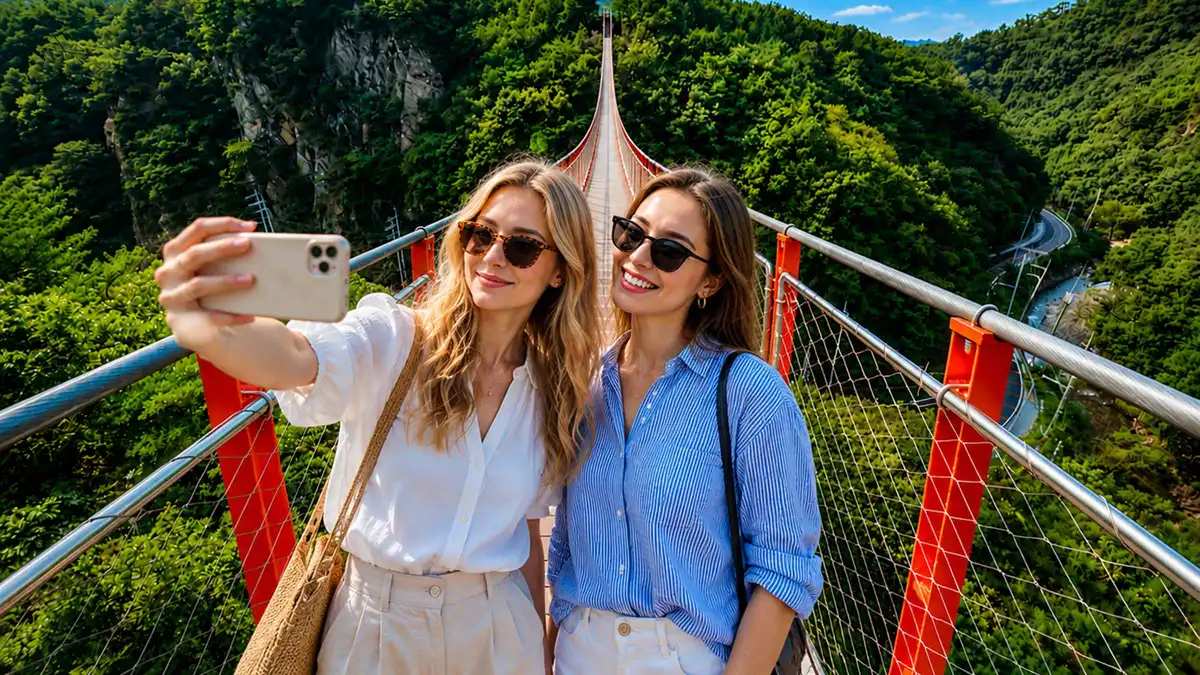
Seoul: DMZ, The 3rd Tunnel and Suspension Bridge Tour Option
Take a guided tour from Seoul to explore the DMZ, the 3rd Infiltration Tunnel, Dora Observatory, and the Mt. Gamak Suspension.
Check Availability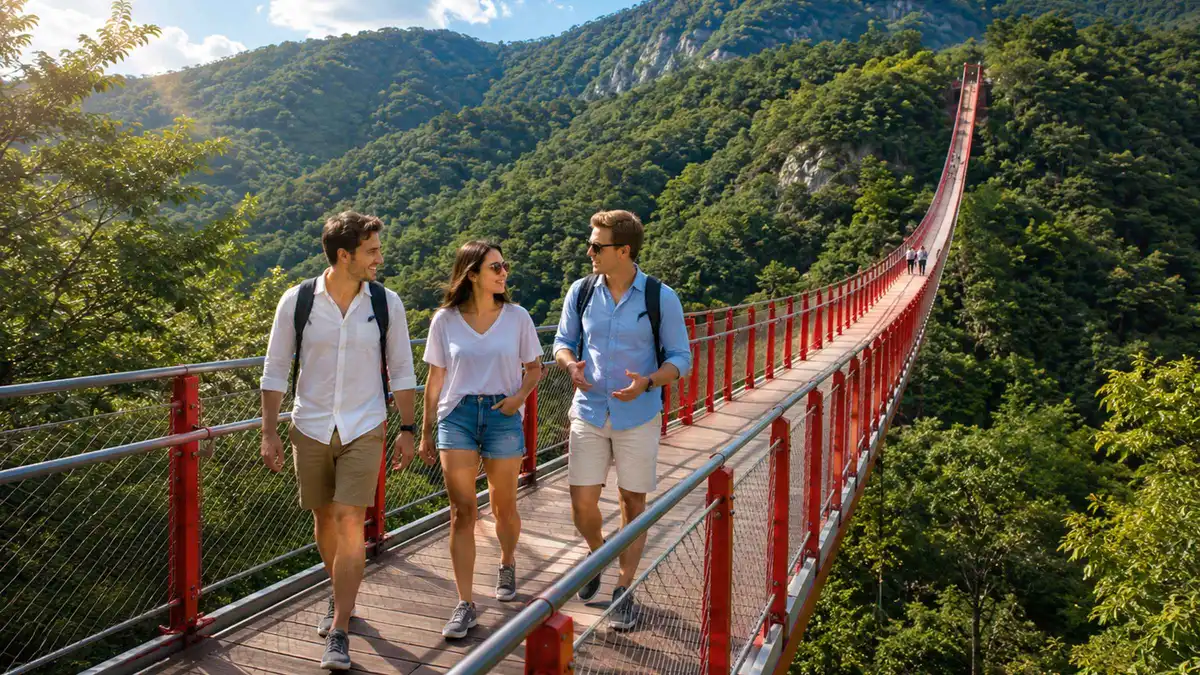 from $50
DMZ Insider Tour: Defector Q&A, 3rd Tunnel & Bridge Options
The original creator of the DMZ + Suspension Bridge tours. Visit North Korea Experience Center, meet a North Korean defector, join a live Q&A, walk through the 3rd Tunnel and see North Korea up.
Check Availability from $59
Seoul: Highlights of Seoul Full-Day Tour
Visit the highlights of Seoul, including Gyeongbokgung Palace, Hanok village, The War Memorial of Korea, and Jogyesa Temple in a.
Check AvailabilityPrices, ratings and details are the platform's own, checked in Q3 2026; dollar figures are the listed prices — the platform bills in your account's currency.
War Memorial Questions
Is the War Memorial of Korea free?
Yes. The permanent exhibition halls, the memorial corridors and the outdoor equipment park are all free; only special exhibitions are occasionally ticketed.
What are the War Memorial's opening hours?
09:30 to 18:00, with last admission at 17:00. It closes on Mondays, and when a Monday is a public holiday the closure moves to the following working day.
How long do you need at the War Memorial of Korea?
Two hours for the Korean War halls, plus about thirty minutes for the outdoor aircraft and armour. The building is large and a rushed visit is not worth making.
Should I visit before or after a DMZ tour?
Before. The border is difficult to read without the sequence of 1950 to 1953, and this is the clearest English-language account of it in the country. DMZ tours are here.
What is the nearest station?
Samgakji, on Lines 4 and 6, Exit 12, immediately beside the site.
Is it suitable for children?
The outdoor park of aircraft and tanks is popular with children and several exhibits can be entered. The indoor halls are sober and detailed, and a children's museum operates separately on the site.
Reviewed Q3 2026 (July–September 2026); next review Q4 2026. Prices, hours and terms are set by the venue or operator and confirmed at checkout.
We may earn a commission if you book through one of our links, at no extra cost to you. Full affiliate disclosure