 Seoul City Guide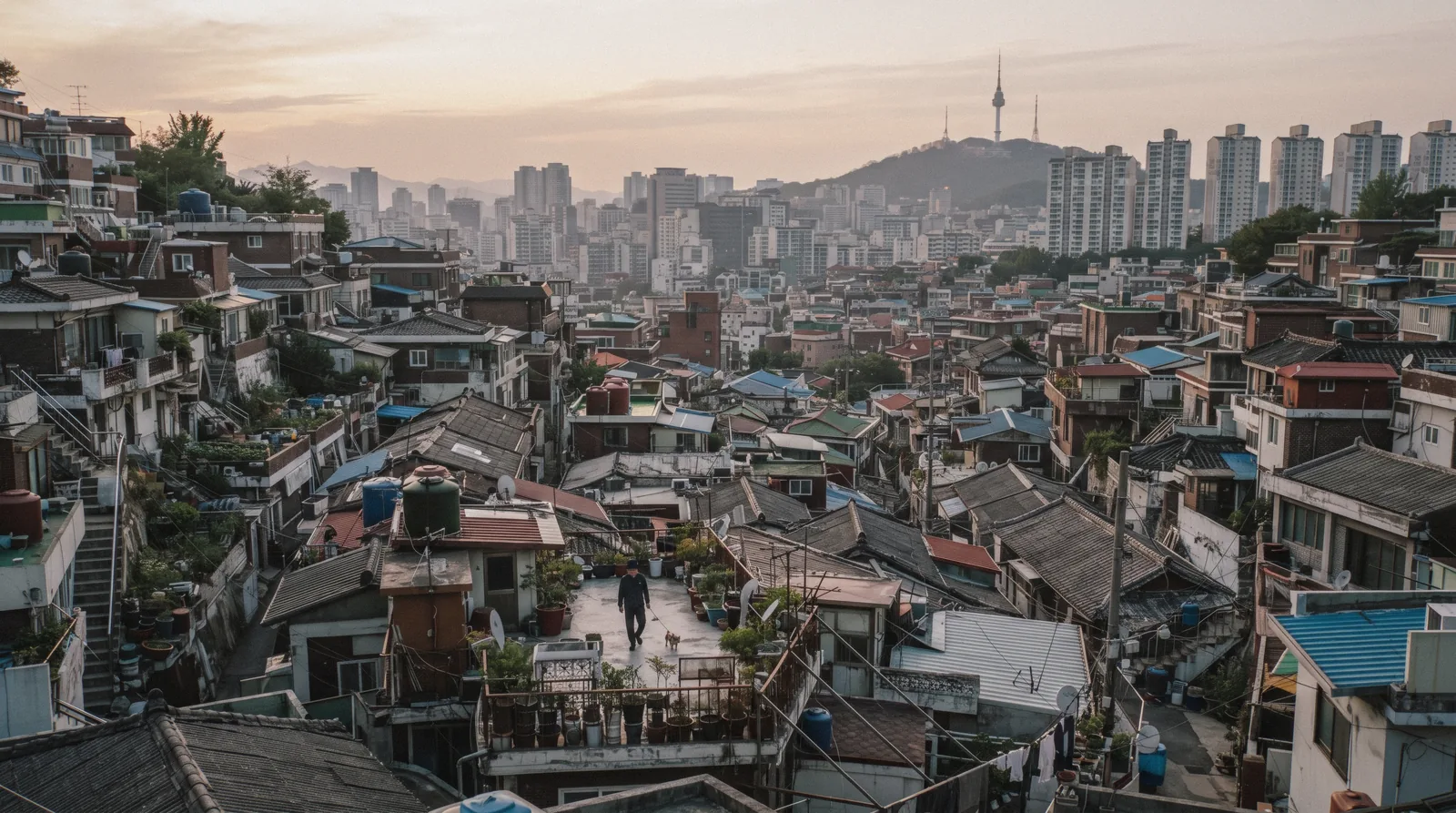
Seoul Neighbourhoods: Which District Is Which
Seoul neighborhoods are not interchangeable, and the mistake most first visits make is treating the city as one place with a metro under it. This page sorts the seven districts a visitor actually uses by what each is for, when it is awake and what it costs, checked in Q3 2026. The trip they sit inside is on the Seoul city guide homepage.
Quick answer Seven districts, each with a shift — pick by hour, not by map
Seoul is thirty kilometres across and its districts keep different hours. The palace quarter works in the morning, Seongsu and Insadong in the afternoon, Myeongdong and Ikseon-dong in the evening, and Hongdae at night. Getting this order right is worth more to a short trip than any ticket.
Key takeaways
- North of the river is where the history is; south of it is where the money is. A first visit stays north.
- The same dinner costs ₩8,000 in Hongdae and ₩40,000 in Gangnam — the cost page breaks it down.
- Where you sleep decides how much metro you use rather than what you see — compare the bases.
The Seven Districts, by Shift
Every district a visitor is likely to use, with the hours it actually works, what it is for and what an ordinary meal costs there. Compiled from the district pages on this site, all checked in Q3 2026.
| District | Awake | What it is for | Dinner, per head |
|---|---|---|---|
| Myeongdong | 16:00–22:30 | Street food, shopping, the first-trip base | ₩12,000–₩18,000 |
| Hongdae | 19:00–02:00 | Buskers, bars, student prices | ₩8,000–₩15,000 |
| Insadong | 11:00–19:00 | Tea houses, crafts, galleries | ₩10,000–₩15,000 |
| Ikseon-dong | 17:00–00:00 | Hanok alleys turned into bars | ₩15,000–₩25,000 |
| Seongsu | 11:00–19:00 | Cafés, design, flagship stores | ₩12,000–₩20,000 |
| Itaewon | 18:00–01:00 | International food, museums on the hill | ₩15,000–₩30,000 |
| Gangnam | 18:00–02:00 | Business, expensive nightlife, COEX | ₩20,000–₩40,000 |
Bukchon is the exception: a residential hanok quarter whose lanes are open to visitors only between 10:00 and 17:00, with a ₩100,000 fine outside those hours.
The River Divides More Than the Map
The Han is a kilometre wide in places, and it splits Seoul into two cities that were built in different centuries.
North of it — Jongno, Jung-gu, Mapo, Yongsan — is the old capital. The palaces, the shrine, the markets, the hanok quarters and the university districts are all here, along with the mountains that ring the historic centre. Streets are narrower, blocks are older, and a great deal of it can be walked.
South of it — Gangnam, Seocho, Songpa — was farmland until the 1970s and was built as policy: wide boulevards, tall towers, planned blocks. It holds the money, the offices, the convention centre and the tallest building in the country, and almost nothing older than living memory.
For a visitor the practical consequence is simple. A first trip of three days should sleep and spend its time north of the river, and cross south deliberately — for Lotte World Tower, the Starfield Library or a baseball game — rather than by accident.
The Palace Quarter: Jongno and Jung-gu
This is the reason most people come. Four of the five palaces, the royal shrine, Bukchon, Insadong, Ikseon-dong, Gwangjang Market and Cheonggyecheon all sit within a rough rectangle two kilometres by one and a half.
Everything in that rectangle is walkable. From Gyeongbokgung to Gwangjang Market is twenty-five minutes on foot; from Insadong to Changdeokgung is eight. Using the metro inside this area usually costs you more time than it saves.
The quarter has one weakness: it goes to bed. Beyond Ikseon-dong and the market's food street, most of Jongno is shut by ten. That is why the standard Seoul day ends somewhere else — Myeongdong, Hongdae or a tower.
How to Pick, in Practice
Two questions settle it: what time of day is it, and how far are you willing to travel for dinner.
If you have one evening, spend it in Myeongdong for street food or Ikseon-dong for something better cooked. If you have a spare afternoon, spend it in Seongsu or Insadong. If you want a night rather than an evening, Hongdae — and check the last train before you commit.
If you are choosing where to sleep, the honest ranking for a first visit is Myeongdong or Jongno first, Hongdae second if you want value and noise, Itaewon third if food matters more than sightseeing, and Gangnam only for a specific reason. The where-to-stay page compares them by journey time to the palaces rather than by price alone.
Start With These Three
If a short trip has room for three districts, these are the three, in this order.
Jongno and the palace quarter
Morning. Palaces, hanok lanes, tea houses, the market: Insadong, Bukchon, Gwangjang.
- Everything within 25 minutes on foot
- Shuts around 22:00
- Cheapest sights in the city
Myeongdong and Namsan
Evening. Street food from 16:00, then N Seoul Tower above it.
- Carts 16:00–22:30
- Airport buses stop here
- Dearest central beds
Tours That Cross Several Districts
Routes that stitch the districts together in one day, from a half-day highlights run to an evening food walk. Ratings and prices are the operators' own figures, checked in Q3 2026.
 from $59
Seoul: Highlights of Seoul Full-Day Tour
Visit the highlights of Seoul, including Gyeongbokgung Palace, Hanok village, The War Memorial of Korea, and Jogyesa Temple in a.
Check Availability from $57
Seoul: Half-Day City Highlights & Palace Tour with Hanbok
Step back in time at Gyeongbokgung Palace and Bukchon Hanok Village on this small-group walking tour (max 15) in Seoul. Choose a tour with or without a Hanbok and enjoy tasty snacks along the.
Check Availability from $67.15
Seoul: Night Palace & Market Food Tour with Vehicle
Unwind in Seoul's night glow where history meets flavor. On this small-group tour (max 15), ride between sights, taste generous market dishes, and feel the city come alive with lights and.
Check AvailabilityPrices, ratings and details are the platform's own, checked in Q3 2026; dollar figures are the listed prices — the platform bills in your account's currency.
Neighbourhood Questions
Which neighbourhood should I stay in in Seoul?
Myeongdong or Jongno for a first visit — central, on two metro lines, walking distance to the palaces. Hongdae for value and nightlife. The full comparison ranks them by journey time.
What is the difference between north and south of the river?
North is the historic city — palaces, markets, hanok quarters, universities. South is Gangnam and its neighbours, built from the 1970s onwards, expensive and modern. Visitors spend most of their time north.
Which district has the best food?
Gwangjang Market for traditional counters, Ikseon-dong for modern Korean, Itaewon for everything non-Korean. Where to eat sorts it by meal rather than by district.
How far apart are the districts?
The palace quarter is walkable end to end in about 25 minutes. Hongdae is 25 minutes from the centre by metro, Seongsu 25, Gangnam 30 to 40. Fares are ₩1,550 a ride — transport rules here.
Which area is best at night?
Hongdae for live music and student prices, Ikseon-dong for a quieter drink, Myeongdong for street food. The metro stops around midnight in all of them.
Is Bukchon a neighbourhood you can visit any time?
No. Its residential lanes are open to visitors between 10:00 and 17:00 only, with a ₩100,000 fine outside those hours. The rules are on the Bukchon page.
Reviewed Q3 2026 (July–September 2026); next review Q4 2026. Prices, hours and terms are set by the venue or operator and confirmed at checkout.
We may earn a commission if you book through one of our links, at no extra cost to you. Full affiliate disclosure