 Seoul City Guide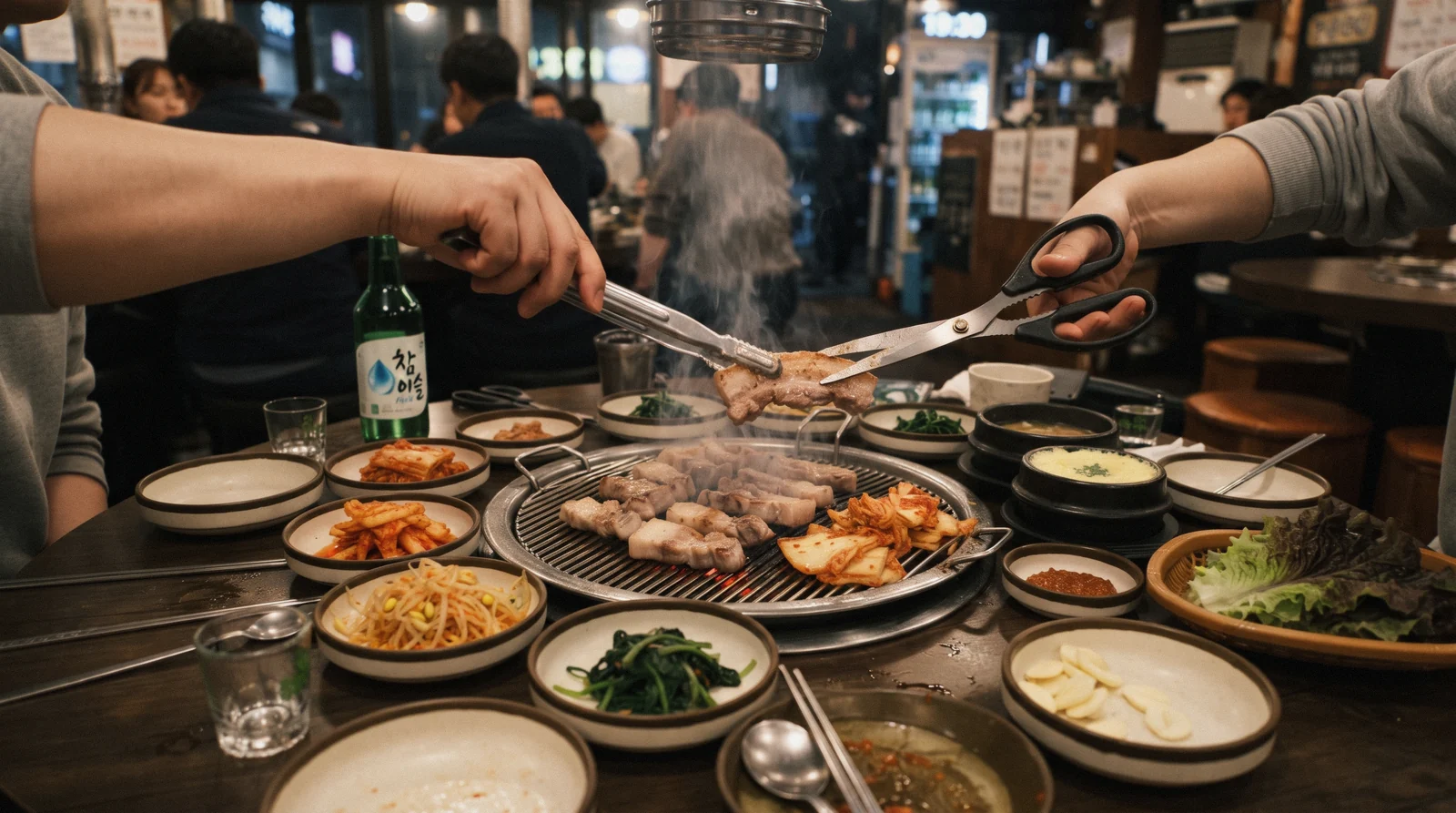
Tipping in Korea, and the Other Rules Nobody Tells You
Tipping in Korea does not happen — not in restaurants, taxis, hotels or bars — and that is the easiest of the rules to learn. This page covers the ones that actually change how a visit feels: two hands, shoes, the priority seats, and the phone in the changing room, checked in Q3 2026. The rest of the trip is on the Seoul city guide homepage.
Quick answer No tipping; two hands; shoes off; phone in the locker
Korea does not tip. Restaurants, taxis, bars, hotels and guides all charge what they charge, service charges do not exist, and leaving money on a table causes confusion rather than pleasure. Beyond that, the conventions worth learning are physical: give and receive with two hands, take your shoes off where there is a raised step, leave the priority seats on the metro empty, and keep your phone in your pocket in a bathhouse.
Key takeaways
- No tipping anywhere. If you want to thank someone, say gamsahamnida and mean it.
- Two hands for anything handed over — a card, a glass, money, a business card. It costs nothing and it is noticed.
- Two rules are law rather than manners: no photography in bathhouse changing areas, and no tourism in Bukchon's Red Zone outside 10:00–17:00.
The Rules Ranked by How Much They Matter
What a visitor should actually learn, ordered by consequence rather than by how often guidebooks mention them.
| Rule | Where | What happens if you get it wrong |
|---|---|---|
| No photography in bathhouse changing or bathing areas | Jjimjilbang, pools | A criminal matter, not a house rule |
| No tourism in Bukchon's Red Zone outside 10:00–17:00 | Bukchon | ₩100,000 fine |
| Priority seats stay empty | Metro | Silent, universal disapproval; they stay empty in a crush |
| Shoes off at a raised step | Hanok, temples, some restaurants | You will be told, kindly |
| Two hands to give and receive | Everywhere | Nothing, but the difference is visible |
| No tipping | Everywhere | Confusion, and sometimes the money returned |
Only the first two carry a penalty. Everything below them is convention, and visitors are given a great deal of latitude — making an effort registers far more than getting it perfect.
Money, and Why Nobody Tips
Service is priced into the bill and staff are paid a wage rather than a share of gratuities. Adding ten per cent to a restaurant bill does not read as generosity; it reads as a mistake, and in smaller places someone will chase you down the street to return it.
That holds everywhere: taxis take the meter, hotels do not expect anything for luggage, bars charge for drinks, and tour guides are paid by the operator. If a service was genuinely good, the Korean response is a warm gamsahamnida and, in a restaurant, coming back.
A few visitor-facing businesses in Itaewon and the hotel trade have begun to accept tips from foreigners who insist, but it remains an import rather than a custom.
Paying happens at the counter by the door rather than at the table, and bills are usually settled by one person for the group — splitting is done afterwards by transfer among friends rather than at the till.
At the Table
Elders first. If there is an older person at the table, they sit first, lift their glass first, and start eating first. Among strangers this rarely applies to a visitor, but it is worth watching for.
Two hands when pouring and receiving. You do not pour your own drink; someone else fills your glass and you fill theirs. Hold the bottle with two hands, or one hand supporting the other forearm, when pouring for someone older.
Turn away to drink if you are drinking with someone significantly older — a small turn of the head, still practised.
Do not stick chopsticks upright in rice. It resembles incense at a funeral. Lay them across the bowl or on the rest.
Banchan are communal and free. Ask for more; do not take them home.
Slurping is fine, blowing your nose at the table is not. Step outside.
None of this is tested. Getting two of the six right marks you as someone who noticed, which is the entire point. More on how ordering works.
In Public
Priority seats. The seats at the ends of each metro carriage are for the elderly, pregnant passengers and people with disabilities, and they stay empty even when the carriage is full. This is the single most visible social rule in Seoul and visitors sitting in them is the most common visible mistake.
Quiet on transport. Phone calls are taken briefly and quietly or not at all. Eating on the metro is not done.
Escalators. Stand on the right, walk on the left, though signage increasingly asks everyone to stand.
Shoes. Off at any raised step — hanok interiors, temple halls, some traditional restaurants, and every private home. Wear socks you are willing to be seen in.
Rubbish. Public bins are scarce and this is deliberate. Carry it to a convenience store or your accommodation.
Photographing people. Ask. In Bukchon this is not just courtesy — the district restricted access precisely because visitors photographed into private homes.
Language, and the Two Words That Do the Work
Annyeonghaseyo — hello — and gamsahamnida — thank you — will carry you through a two-week trip. Both are used constantly, both are appreciated from a visitor, and neither requires getting the tone right.
Add jwesonghamnida (excuse me, apologetic) and igeo juseyo (this one, please, while pointing) and ordering becomes straightforward.
English coverage is good on signage, in the metro and at major sights, and thin in small restaurants and taxis. Papago handles Korean far better than Google Translate does, including photographs of menus, and Naver Map is the map that works — Google Maps does not give walking directions in Korea.
One social note: Koreans frequently ask a visitor's age early in a conversation. It is not rudeness; the language has different registers depending on relative age, and the question is how someone works out which to use.
What to Read Next
Three pages where these rules apply most.
Jjimjilbang
Where the phone rule is law: how a Korean bathhouse works.
- ₩10,000–₩20,000
- Shower before the pools
- Phone in the locker
Bukchon Hanok Village
The 10:00–17:00 rule and why it exists: Bukchon.
- Free
- ₩100,000 fine outside the window
- Residents exempt
Where to eat
How ordering and paying work: where to eat in Seoul.
- Side dishes free
- Pay at the counter
- No tipping
Etiquette Questions
Do you tip in Korea?
No. Restaurants, taxis, bars, hotels and guides do not expect tips, service charges do not exist, and money left on a table is often returned to you.
What are the main dos and don'ts in Seoul?
Two hands when giving or receiving, shoes off at a raised step, priority seats on the metro left empty, no chopsticks upright in rice, and no phones in bathhouse changing areas.
Is it rude to be asked my age in Korea?
It is not rudeness. Korean has speech levels that depend on relative age, so the question is how someone decides which register to use.
Can I photograph people in Seoul?
Ask first. In Bukchon the district restricted visitor access because of photography into private homes, and in bathhouses photography is a criminal matter.
Do I need to speak Korean?
No. Signage, the metro and major sights are in English. Annyeonghaseyo and gamsahamnida cover the social part; Papago covers the rest and handles menus from a photograph.
Why are there no rubbish bins in Seoul?
A deliberate policy dating from waste-reduction measures in the 1990s. Carry rubbish to a convenience store or your accommodation.
What are the do's and don'ts in South Korea?
Two hands when giving or receiving, shoes off at a raised step, priority seats on the metro left empty, no chopsticks upright in rice, no phones in bathhouse changing areas — and no tipping anywhere.
Do you need to carry cash in South Korea?
Cards work almost everywhere, including most market stalls. Carry ₩50,000 in notes for the smallest stalls and for loading a transport card; Global ATMs in convenience stores take foreign cards.
Do and don'ts in South Korea?
Two hands when giving or receiving anything, shoes off at a raised step, priority seats on the metro left empty, no chopsticks standing upright in rice, and no phones in bathhouse changing areas. And no tipping — not in restaurants, taxis, bars or hotels. The full etiquette page.
Reviewed Q3 2026 (July–September 2026); next review Q4 2026. Prices, hours and terms are set by the venue or operator and confirmed at checkout.
We may earn a commission if you book through one of our links, at no extra cost to you. Full affiliate disclosure